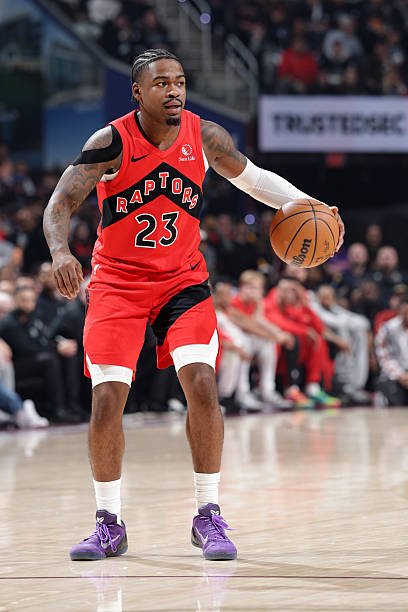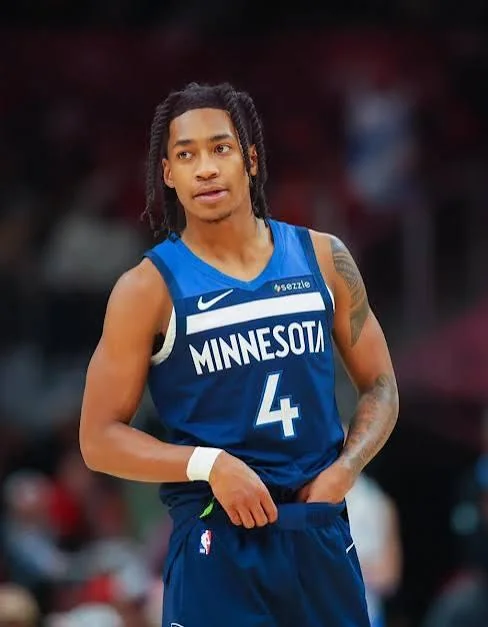
Rob Dillingham may be the latest victim of the NBA’s transition into the era of the big guard and wing.
In today’s NBA, there is becoming less room for a small, shifty bucket-getter who struggles defensively. Dillingham is a perfect example of how quickly the league can move on from a player who possesses an intriguing offensive skill set but doesn’t fit the modern defensive mold.
Just two seasons ago, Dillingham was the No. 8 overall pick in the NBA Draft. The Timberwolves believed they had found a guard of the future to pair with Anthony Edwards.
Instead, his time in Minnesota never really got off the ground.
Dillingham averaged just 10 minutes per game across 84 games with the Timberwolves. Minnesota dealt with injuries throughout his tenure, while a 38-year-old Mike Conley remained the team’s primary point guard, yet Dillingham still struggled to carve out a consistent role.
A major reason was his defense.
At his size, Dillingham was always going to have to overcome questions about whether he could stay on the floor defensively. Unfortunately, his offensive production wasn’t strong enough to consistently make up for those limitations.
He ranked in the bottom 25% of DARKO-DPM, shot roughly 30–35% from three, and was among the league’s worst rim finishers last season.
That combination is becoming increasingly difficult to survive with in the modern NBA.
After being traded to the Bulls midway through last season, he failed to make a impactful impression to stay with the team in this new youthful rotation.
A week ago he was once again traded, this time to the Charolette Hornets.
Just a few days after arriving, Dillingham was cut by the Hornets.
Dillingham isn’t the first talented scorer to discover that being able to get buckets isn’t enough anymore. Cam Thomas experienced a similar situation last season, showing how difficult it can be for undersized guards who don’t provide enough value defensively or as playmakers to consistently stay in an NBA rotation.
The NBA isn’t necessarily getting rid of small guards.
It’s getting rid of small guards who don’t give teams enough reasons to keep them on the floor.
Players like Dillingham have to be exceptional offensively to overcome their physical limitations. They need to either become reliable shooters, elite creators, or develop enough defensively to avoid being targeted.
Otherwise, there simply may not be a place for them.
And that’s the reality Dillingham now faces.
Two years after being one of the most highly touted young guards in the league, his NBA career is suddenly in serious question.